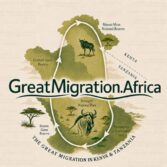
Great Migration in Africa:
Kenya and Tanzania explained
A complete guide to the Serengeti–Mara migration as a year-round living movement system shaped by wildebeest, zebra, gazelle, rainfall, grasslands, rivers, predators, safari planning and conservation.
Welcome to Great Migration Africa
Welcome to Great Migration Africa, a website that seeks to interpret the Serengeti–Mara migration as a living Kenya–Tanzania movement system—interpreting wildebeest, zebra, gazelle, rainfall, grasslands, rivers, predators, safari planning, and conservation through a transboundary ecological lens.
A year-round movement system,
not a single event
The Great Migration in Africa is the year-round movement of wildebeest, zebras, gazelles, and other grazing herbivores across the Serengeti–Mara ecosystem of northern Tanzania and southern Kenya.
What exactly is the great migration?
The Great Migration is a continuous, rainfall-driven movement of grazing animals across Tanzania and Kenya in search of fresh grass, water, breeding opportunity and seasonal survival.
Why this definition matters
It is most often called the Great Wildebeest Migration because wildebeest form the dominant moving population, but the migration is not made of wildebeest alone. Zebras, Thomson’s gazelles, Grant’s gazelles, elands, topis, and other plains animals also shape the movement, while lions, cheetahs, hyenas, crocodiles, jackals, vultures, and other predators respond to the seasonal flow of prey.
At its simplest, the Great Migration is a search for fresh grass and water. At a deeper ecological level, it is a landscape-scale strategy for surviving in a variable savanna where rainfall, grass quality, water, disease risk, breeding opportunity, and predation pressure shift across time and space.
Tanzania and Kenya share the Serengeti–Mara migration system.
Bedelian’s synthesis describes about 1.3 million wildebeest in the migration.
Large numbers of zebra and Thomson’s gazelle also move through the system.
Calving, rutting, crossings, dry-season grazing and return movement all matter.
Facts, ecosystem, cycle
and animals
Toggle between the tabs below to understand what the migration is, where it belongs, how the annual cycle works, and which animals form the living movement system.
Core migration foundations
Quick Great Migration Facts
The migration is often described through the drama of the Mara River crossings, but that is only one phase. The full system includes calving in the southern Serengeti and Ndutu, northward movement through the central and western Serengeti, possible Grumeti River crossings, movement into the Northern Serengeti and Masai Mara, repeated Mara River crossings, and a return south with the rains.
| Attribute | Expert summary |
|---|---|
| Main entity | The Great Migration / Great Wildebeest Migration |
| Core landscape | Serengeti–Mara ecosystem |
| Countries | Tanzania and Kenya |
| Main protected areas | Serengeti National Park, Ngorongoro Conservation Area, Masai Mara National Reserve |
| Important wider lands | Private conservancies, community lands, pastoral rangelands, dispersal areas, migration corridors |
| Main animals | Wildebeest, zebra, Thomson’s gazelle, Grant’s gazelle, other antelope |
| Main predators | Lions, cheetahs, hyenas, crocodiles, leopards, jackals, vultures |
| Main driver | Rainfall-driven grass and water availability |
| Movement type | Annual circular movement, not a one-way journey |
| Best-known spectacle | Mara River crossings |
| Most important birth phase | Wildebeest calving in southern Serengeti / Ndutu |
| Conservation concern | Corridors, dispersal areas, wet-season ranges, fencing, agriculture, roads, settlement, tourism pressure |
| GreatMigration.Africa interpretation | A living transboundary movement system, not just a safari spectacle |
Why it is called the Great Wildebeest Migration
The migration is called the Great Wildebeest Migration because wildebeest form the largest and most visually dominant moving herds. However, a more accurate interpretation is that the migration is a multi-species grazing system. Wildebeest are the central animal, but zebras and gazelles are not background species. They occupy different feeding niches, respond to related grassland conditions, and form part of the ecological pulse that sustains predators, scavengers, nutrient cycling, and safari visibility across the ecosystem.
Migration Ecosystem
The Great Migration belongs to the Serengeti–Mara ecosystem, not to one park, one reserve, or one country. This ecosystem crosses the political boundary between Tanzania and Kenya, linking the wider Serengeti grasslands with the Greater Mara landscape.
Tanzania-side migration areas
- Southern Serengeti
- Ndutu
- Central Serengeti / Seronera
- Western Serengeti / Grumeti
- Northern Serengeti
- Eastern Serengeti return routes
- Ngorongoro Conservation Area, especially around Ndutu during calving season
Kenya-side migration areas
- Masai Mara National Reserve
- Mara River crossing areas
- Mara private conservancies
- Greater Mara rangelands
- Loita-linked local wildebeest movement systems
The Serengeti–Mara migration has endured because a large part of this landscape still allows seasonal movement. Research summaries emphasize that migrations depend on corridors and dispersal areas, many of which lie outside formal protected areas and are vulnerable to land-use change.
Kenya and Tanzania migration geography
| Country | Main migration areas | Strongest migration phases | Main visitor experience |
|---|---|---|---|
| Tanzania | Serengeti National Park, Ndutu, Ngorongoro Conservation Area, Grumeti, Northern Serengeti | Calving, rutting, Grumeti movement, Mara River crossings from the Tanzania side, return south | Longer, more geographically varied migration experience |
| Kenya | Masai Mara National Reserve, Mara River, private conservancies, Greater Mara landscape | July–October herds, Mara River crossings, big-cat viewing, conservancy-based safari experiences | Compact, intense, often shorter migration safari experience |
Tanzania generally offers more of the annual cycle because the herds spend much of the year somewhere within the Serengeti system. Kenya is especially important during the dry-season Mara phase, usually from July to early October, when many visitors hope to see large herds and river crossings. Timing varies every year.
Annual Cycle
The Great Migration is rainfall-driven
The Great Migration is fundamentally controlled by rainfall and grass. Rain falls unevenly across the Serengeti–Mara landscape. Grass grows, matures, dries, and declines in different places at different times. Wildebeest and associated grazers move because the best forage is not fixed in one location.
Forage
Fresh grass after rain, grass height and nutrient quality influence movement.
Water
Water availability becomes especially important during dry-season movement.
Survival
Calving requirements, predator risk, disease and parasite pressure all matter.
Landscape access
Seasonal access to open plains and traditional movement routes support the cycle.
Herd response
Herd-level decision-making means groups may split, pause, reverse or reform.
Calendar caution
A month-by-month guide is useful, but rainfall is the operating system.
The annual circular migration
The Great Migration is often illustrated as a circle, but that circle should not be read too rigidly. The herds do not move in one neat line. They spread across many kilometres, split into groups, pause, double back, and respond to local rainfall.
| Period | Typical area | Main migration phase |
|---|---|---|
| January–March | Southern Serengeti and Ndutu | Calving season, short-grass plains, predator activity |
| April–May | Central Serengeti / Seronera and moving west | Northward movement, rutting, transitional grazing |
| May–July | Western Serengeti / Grumeti | Western Corridor movement, possible Grumeti River crossings |
| July–October | Northern Serengeti and Masai Mara | Mara River crossings, dry-season grazing, Kenya–Tanzania border movement |
| October–December | Eastern / southern Serengeti return route | Return south as short rains renew the plains |
Why the Great Migration is always happening somewhere
A common mistake is to think the Great Migration “starts” when wildebeest reach the Masai Mara. In reality, the migration is always happening somewhere in the Serengeti–Mara system. The visible drama changes by season. In January and February, the migration may appear as thousands of calves on the southern plains. In May, it may appear as rutting bulls and herds moving through central or western Serengeti. In July and August, it may appear as riverbank tension at the Mara River. In November, it may appear as scattered herds responding to short rains on their return south.
This is why GreatMigration.Africa treats the migration as a cycle of ecological phases, not a single tourist season.
Calving, rutting, river crossings and return south
Calving usually takes place in the southern Serengeti and Ndutu plains from January to March, with peak calving often associated with February and early March. Short-grass plains provide nutritious forage, synchronized births reduce the probability that any one calf will be taken, open landscapes help herds detect predators, and predator activity increases because calves are vulnerable.
Rutting usually occurs as herds move northward through the central and western Serengeti. Males establish temporary territories and compete for access to females. This phase is less famous than calving or river crossings, but it shows that the migration is a full life-cycle process.
River crossings are most famous at the Mara River, usually during the dry-season movement between Northern Serengeti and Masai Mara, broadly from July to October. Grumeti River crossings usually occur earlier, during movement through the Western Serengeti, broadly around May to July. Crossings are dramatic but never guaranteed.
The return south connects the migration back to short rains, renewed grass growth, southern Serengeti plains, Ndutu, calving preparation, and the next annual cycle. Without the return south, the migration would be a one-way movement. The ecological reality is circular.
Migrating Animals
The Great Migration is a grazer-led system. The main moving animals are herbivores, while predators respond to their movement. The Great Migration should not be described as “wildebeest moving while predators follow.” Most predators do not migrate in the same way because they hold territories. Instead, the herds move through predator landscapes, creating seasonal pulses of prey availability.
Main grazing animals
| Animal | Role in the migration |
|---|---|
| Wildebeest | Dominant migratory grazer; main visual and ecological driver |
| Zebra | Moves with wildebeest; uses grass differently and contributes to grazing succession |
| Thomson’s gazelle | Important smaller grazer; associated with open plains and predator activity |
| Grant’s gazelle | More drought-tolerant plains antelope; part of the wider grazing community |
| Topi, eland and other antelope | Support the wider savanna prey base and seasonal wildlife experience |
Main predators and scavengers
| Predator / Scavenger | Migration relationship |
|---|---|
| Lion | Hunts wildebeest, zebra and other prey; prides remain territorial rather than migrating as herds do |
| Cheetah | Strongly associated with open plains and calving-season prey |
| Spotted hyena | Predator and scavenger; benefits from both live prey and carcasses |
| Crocodile | Key predator at Mara River and Grumeti River crossings |
| Jackal | Important around calving areas and carcass sites |
| Vultures | Scavenge carcasses and return nutrients into the system |
Why mixed grazers matter
Wildebeest are the central animal, but zebras and gazelles are part of the ecological pulse. Zebras use grass differently and help shape grazing succession. Gazelles occupy another layer of the plains-grazer community. These animal relationships are part of why the migration sustains predators, scavengers, nutrient cycling and safari visibility across the ecosystem.
Places, meaning
and conservation
Read the sections below to learn about places in the migration, why the migration matters ecologically and economically, and what must be protected for it to continue.
Landscape interpretation
The migration is understood through places, ecological meaning, tourism value and conservation pressure.
Places: Serengeti, Masai Mara and the wider movement landscape
Serengeti National Park and the migration
Serengeti National Park is the core Tanzania-side protected area of the Great Migration. It supports multiple phases of the migration across different sectors. A Serengeti migration safari is not one fixed product. It must be matched to the season. A camp that is excellent in February may be poorly placed for August. A northern Serengeti camp may be ideal for crossings, but irrelevant for calving.
| Serengeti sector | Migration function |
|---|---|
| Southern Serengeti | Calving, short-grass grazing, January–March |
| Central Serengeti / Seronera | Transitional movement, rutting, year-round wildlife |
| Western Serengeti / Grumeti | Western Corridor movement, Grumeti River crossing phase |
| Northern Serengeti | Mara River crossings, Kenya-border movement, July–October |
| Eastern Serengeti | Return route south after northern dry-season movement |
Masai Mara National Reserve and the migration
Masai Mara National Reserve is the most famous Kenya-side migration area. It becomes especially important when herds enter the Mara ecosystem, usually around July through early October, though timing changes with rainfall. The Reserve contains famous Mara River crossing areas, concentrates wildlife in a relatively compact landscape, offers strong predator viewing, is accessible for shorter Kenya safaris, and is globally associated with migration photography and documentaries.
However, it can also become crowded during peak crossing season. River crossing areas can attract many vehicles, and visitors staying only a few days may still miss a crossing because nobody can predict exactly when herds will cross. A strong Masai Mara safari should therefore be designed around both opportunity and realism.
Private conservancies and the Greater Mara
Private conservancies around the Masai Mara are essential to understanding the modern Kenya-side migration experience. They are not just accommodation zones. They are part of the wider movement landscape and an important conservation model. Conservancies are land outside government-controlled parks and reserves, set aside for wildlife by individuals or communities. Landowners receive rents from safari operators, while communities may benefit through employment and other income opportunities.
Lower density
Conservancies can offer lower vehicle density and more controlled tourism numbers.
Different activities
Night drives, walking safaris and off-road driving may be permitted where rules allow.
Conservation incentives
They can support community-linked income and habitat outside the Reserve.
For GreatMigration.Africa, the most important point is that conservancies help show the migration as a landscape beyond park boundaries. The future of wildlife movement depends on what happens in these surrounding lands as much as what happens inside famous reserves.
What the Great Migration Means
Why the Great Migration is more than a river crossing
The river crossing is the most famous image of the Great Migration, but it is only one moment in a much longer ecological process. Reducing the migration to the Mara River crossing weakens visitor understanding. It also encourages unrealistic safari expectations and sometimes poor guiding behaviour, especially when vehicles crowd riverbanks waiting for a crossing.
- Rainfall tracking
- Grassland renewal
- Calving
- Predator-prey pulses
- Rutting
- River crossings
- Dry-season grazing
- Return movement
- Nutrient cycling
- Community rangeland use
- Conservancy-based habitat protection
- Conservation conflict over land, roads and fences
GreatMigration.Africa’s editorial position is that a good migration safari is not measured only by whether someone saw a crossing. It is measured by whether the visitor understood the living system: the grass, rain, herds, predators, rivers, land-use pressures and conservation decisions that make movement possible.
Why the Great Migration matters ecologically
The Great Migration is one of the clearest examples of movement ecology at continental scale. It links animal behaviour to rainfall, soil, plant growth, predation, disease, reproduction and nutrient flow.
Biomass movement
It moves biomass across the landscape and shapes grassland structure through grazing.
Food web
It feeds predators and scavengers while supporting calving and recruitment.
Nutrient cycling
It redistributes nutrients through dung and carcasses and maintains a visible savanna food web.
The migration is therefore not simply something that happens inside the Serengeti–Mara ecosystem. It is one of the processes that helps make the ecosystem what it is.
Why the Great Migration matters economically
The Great Migration is also one of East Africa’s most important tourism assets. It draws travelers to Tanzania and Kenya, supports safari operators, guides, camps, conservancies, park agencies, local businesses and community-linked tourism income. The important point is not only that the migration generates tourism income. It is that tourism income can either support or undermine the migration depending on how it is structured.
- Reward conservation-compatible land use.
- Support community conservancies.
- Reduce pressure at river crossings.
- Use skilled guides.
- Avoid disturbing herd movement.
- Spread value beyond the most famous hotspots.
- Help travelers understand conservation realities.
The Great Migration’s economic value is strongest when it reinforces the ecological conditions that keep the migration alive.
Conservation
Migration corridors and dispersal areas
The Great Migration depends on more than protected-area cores. It depends on corridors, dispersal areas, wet-season ranges, dry-season refuges, and community rangelands that allow animals to move between seasonal resources. Wildebeest rely on migratory corridors and dispersal areas as they move out of protected areas to seasonal habitats, often in pastoral lands, and severe population declines can follow when these areas are degraded or lost.
| Term | Meaning in migration conservation |
|---|---|
| Migration corridor | A movement route linking seasonal habitats |
| Dispersal area | A wider seasonal landscape used by wildlife outside core protected areas |
| Wet-season range | Grazing or calving area often outside formal parks |
| Dry-season refuge | Area with water or forage when surrounding land dries |
| Landscape connectivity | The ability of animals to move across the ecosystem without being blocked |
Threats to the Great Migration
The Serengeti–Mara migration remains the great surviving example of East African wildebeest movement, but the wider regional history is a warning. Major declines have been reported in several other wildebeest migrations where corridors and seasonal ranges were blocked or lost, including the Mara–Loita, Athi-Kaputiei and Tarangire–Simanjiro systems.
| Threat | Why it matters |
|---|---|
| Fencing | Blocks seasonal movement and fragments rangelands |
| Agriculture | Converts wet-season ranges and dispersal areas |
| Settlement expansion | Reduces permeability of traditional movement routes |
| Roads and infrastructure | Fragment habitat and can trigger further development |
| Tourism pressure | Can disturb crossings, hunts and animal movement if poorly managed |
| Climate change | Makes rainfall and forage more variable, increasing the need for movement |
| Mara River catchment pressure | Affects water systems that support dry-season survival and crossings |
| Loss of community rangelands | Weakens the land base around formal protected areas |
| Weak governance | Makes corridor protection and land-use planning difficult |
What must be protected?
The Great Migration cannot be conserved by protecting only the places tourists know. Serengeti National Park and Masai Mara National Reserve are essential, but the migration also depends on wider lands that connect seasonal habitats.
- Calving plains
- Wet-season grazing areas
- Dry-season refuges
- Migration corridors
- Dispersal areas
- River systems
- Community rangelands
- Private conservancies
- Pastoral landscapes compatible with wildlife movement
- Buffer zones around protected areas
- Cross-border ecological continuity
The future of the Great Migration will be shaped by land-use decisions as much as by wildlife management. If movement routes close, the migration becomes compressed. If wet-season ranges are converted, birth and feeding systems weaken. If rivers and catchments degrade, dry-season survival becomes more fragile. If tourism becomes too extractive, it may damage the very spectacle it sells.
Safari planning
and common questions
Visitor planning and answers
Plan by ecological phase, not just by month or crossing expectations.
Great Migration Safari Planning
A responsible Great Migration safari begins with honest expectations. Visitors should understand that the migration is not fixed to exact dates, river crossings cannot be guaranteed, herds may be spread across a wide area, some wildebeest may remain in the Northern Serengeti and never cross into Kenya, and calving and crossings are different experiences.
Crowding can reduce both wildlife welfare and visitor enjoyment. The best guide interprets the landscape, not just the sighting. Ethical viewing matters, especially at crossings and predator hunts.
Responsible migration safari principles
| Principle | What it means |
|---|---|
| Do not demand a crossing | Pressure from visitors can encourage poor guiding behaviour |
| Choose skilled guides | Interpretation matters more than rushing between sightings |
| Respect animal movement | Vehicles should not block herds, crossings or predator-prey interactions |
| Consider conservancies | Low-density tourism can improve experience and support habitat outside reserves |
| Travel with ecological curiosity | Ask why the herds are there, not only whether they are there |
| Support conservation-minded operators | Tourism should help keep rangelands open and communities involved |
How to think about the Great Migration when planning a safari
Most visitors ask: when should I go? A better first question is: which migration phase do I want to understand and experience?
| Desired experience | Best general focus |
|---|---|
| Newborn calves and predator action | Southern Serengeti / Ndutu, January–March |
| Rutting and herds moving north | Central / western Serengeti, April–May |
| Grumeti movement and western route | Western Serengeti, May–July |
| Mara River crossings | Northern Serengeti and Masai Mara, July–October |
| Lower-density crossing experience | Northern Serengeti, depending on camp and timing |
| Kenya-focused shorter safari | Masai Mara, July–October |
| Broader ecological understanding | Tanzania or Kenya–Tanzania combined itinerary |
| Responsible lower-density viewing | Mara conservancies plus Reserve access |
| Research-informed interpretation | Choose a guide who explains movement, grass, rainfall and conservation, not just sightings |
A strong migration safari is built around season, geography, guide quality, visitor expectation and ecological phase.
Common Questions About the Great Migration
Is the Great Migration only in Kenya?
No. The Great Migration is shared by Tanzania and Kenya. Much of the annual movement happens in Tanzania’s Serengeti system, while Kenya’s Masai Mara becomes especially important during the dry-season northern phase.
Is the Great Migration only in Tanzania?
No. Tanzania contains much of the annual route, but the migration also reaches the Masai Mara in Kenya, especially between July and early October in many years.
Is the Great Migration only the Mara River crossing?
No. The Mara River crossing is one dramatic phase. The full migration includes calving, rutting, northward movement, Grumeti crossings, dry-season grazing, Mara River crossings and return movement south.
Can you guarantee seeing a river crossing?
No. River crossings are unpredictable. Herds may wait, turn away, cross somewhere else, cross at night, or cross before or after a visitor arrives. A longer stay improves chances but does not guarantee the event.
What is the best place to see the Great Migration?
It depends on the season. For calving, focus on Ndutu and southern Serengeti. For Mara River crossings, focus on Northern Serengeti or Masai Mara. For a shorter Kenya safari, Masai Mara is practical. For a fuller annual-cycle safari, Tanzania gives broader seasonal coverage.
Why do wildebeest migrate?
Wildebeest migrate to track changing grass and water across a variable savanna. Movement helps them access seasonal forage, calving grounds and survival opportunities that would not be available in one fixed location.
GreatMigration.Africa Welcomes you to Explore All About the Great Migration in East Africa
We understand The Great Migration as a living negotiation between movement and constraint. The wildebeest, zebras and gazelles move because the Serengeti–Mara landscape changes. Rainfall shifts. Grass emerges and dries. Rivers rise and fall. Predators wait in territories. Calves are born into open plains. Herds split, hesitate, return and reform. The migration is therefore not a fixed route; it is a dynamic relationship between animals and a changing landscape.
The deeper conservation question is whether the landscape will remain open enough for this relationship to continue. Research on declining wildebeest migrations in East Africa shows that migrations can collapse when corridors, dispersal areas and wet-season ranges are blocked or converted. The Serengeti–Mara migration has survived because it still retains a rare degree of ecological continuity, but it is not immune to fencing, roads, agriculture, settlement growth, tourism pressure, river catchment stress and climate variability.
For travelers, the most responsible way to experience the Great Migration is to see more than the crossing. A visitor who understands calving, grass, rain, predators, conservancies, corridors and community rangelands leaves with a more accurate view of what is at stake. The Great Migration is not only Africa’s most famous wildlife movement. It is a test of whether modern conservation, tourism and land-use governance can still make space for animals whose survival depends on movement across borders, seasons and human boundaries.
Let’s Talk About Migration!
Want to know about the herd movements today? Want to inquire or book a Migration Safari? Wondering whether to go to view the Migration in Kenya or Tanzania? Want to learn about latest research and studies on the Great Migration, be a partner to support landscape conservation efforts, or just connect and say hello?
- Herd movement updates
- Migration safari inquiries
- Kenya vs Tanzania planning
- Research and studies
- Landscape conservation partnerships
- General hello
Email Address: gma@greatmigration.africa